How-to
How to clean silicone resin molds and store them
Published
As an Amazon Associate we earn from qualifying purchases. This does not change our picks. Affiliate disclosure
New to Prime? Try Prime free for fast, free shipping on eligible items.
Short answer
Lift cured flakes out of a silicone mold with tape, wipe sticky uncured resin off with a paper towel and a little isopropyl alcohol, and wash glitter, dust and film away with warm water and mild soap. Dry the mold fully, then store it flat, covered and out of sunlight. Silicone molds are reusable for as long as the cavity surface stays undamaged.
Gear for this job
All 6 picks comparedLET'S RESIN deep flower mold set, 8 pieces
See price on AmazonSee it on AmazonKISREL rectangular resin block molds, set of 3
See price on AmazonSee it on AmazonResinWorld 10 inch arch mold, 3 inches deep
See price on AmazonSee it on Amazon
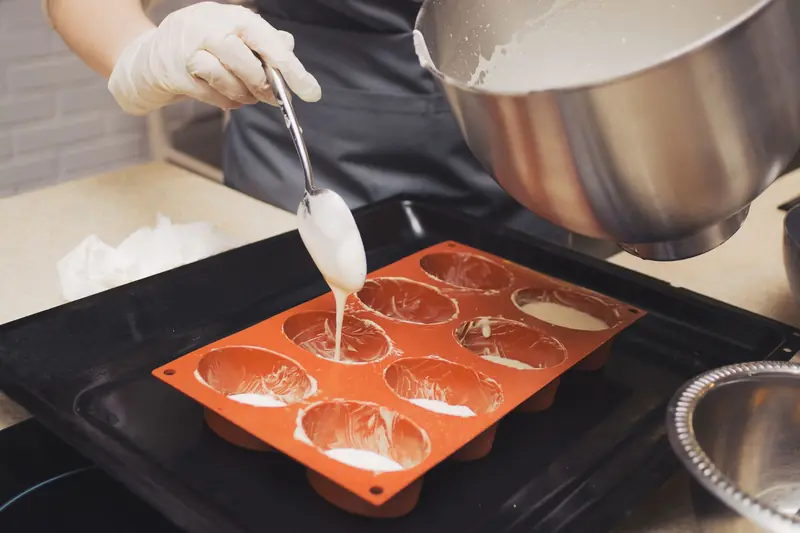
This page covers silicone molds used for epoxy and UV resin. What you clean with depends on what is left in the mold: hard cured bits, sticky uncured resin, or loose glitter, mica and dust. Each needs a different method, and the wrong one costs you the surface. Resin copies the cavity exactly, so every scratch, dull patch or bit of lint in the mold shows on the next piece. The methods come from maker instructions (Let's Resin, Smooth-On) and Resin Obsession's mold care advice. No source gives a verified number of casts per mold, so this page gives none.
What to clean resin molds with: match the mess
Look into the cavity and decide which row you are in before you reach for anything. A mold often needs two rows: tape for the flakes first, then a wash for the glitter.
| What is in the mold | Use | Avoid |
|---|---|---|
| Hard cured flakes, drips and thin skins | Sticky side of tape, pressed on and lifted | Picking with a knife, pin or fingernail |
| Sticky or wet uncured resin | Dry paper towel, then one quick isopropyl alcohol wipe | Soaking in solvent, rinsing resin into the sink |
| Glitter, mica, dust and lint | Warm water, mild dish soap, fingers or a soft cloth | Scrub pads and stiff brushes |
| Greasy film or mold release build-up | Warm soapy water, rinse, dry fully | The dishwasher |
| A whole cavity of resin that never cured | Pour out, cover with fresh mixed resin, demold when hard | Scraping the cavity |
How to clean resin molds after use, step by step
Do this after every session, while you still remember what went into the mold. Wear nitrile gloves if any resin in the mold is still liquid or sticky, because uncured resin can cause skin allergy with repeated contact: see is UV resin safe.
- 1
Check that leftover resin is hard. Wait the full demold time for your resin, about 24 hours for most coating and casting epoxy, before judging what is cured and what is not.
- 2
Flex the mold over a trash bin and push each cavity partly inside out. Cured crumbs let go when the silicone stretches.
- 3
Press the sticky side of a piece of tape into the cavity and lift. Repeat with fresh tape until nothing more comes up. Let's Resin gives this method for dried resin particles.
- 4
Wipe any sticky uncured resin out with a dry paper towel. Follow with a second towel dampened with isopropyl alcohol, one quick wipe, and bin both towels.
- 5
Wash the mold in warm water with a few drops of mild dish soap, rubbing the cavities with your fingers or a soft cloth. Rinse until no suds are left.
- 6
Shake the water out, pat the mold with a lint-free cloth and leave it cavity side down on a clean towel until no drops are left in the corners.
- 7
Lift any lint the towel left behind with one more piece of tape, then put the mold away flat.
How to get sticky uncured resin out of a silicone mold
Sticky resin smears instead of lifting, so soap and water alone will not move it. For a thin film, the paper towel and isopropyl alcohol wipe in step 4 is enough. Keep the alcohol contact short. Resin Obsession warns that cleaning uncured resin out with solvents such as acetone, isopropyl alcohol or mineral spirits carries a real chance of ruining the mold, and lists them as a last resort. So wipe, do not soak, and never leave a mold sitting in solvent.
For a cavity full of resin that never set, Resin Obsession's method uses no solvent. Pour or scoop as much liquid as you can into a disposable cup. Mix a fresh batch, measured carefully, and pour it over the residue. The new resin blends with the old, and once it has cured you peel both out together. For why the first pour failed, see why epoxy resin stays sticky or, for UV resin, why UV resin stays sticky.
Note.Keep liquid resin out of the sink: the Let's Resin safety data sheet says not to let it enter drains. Wipe first, wash second.
What damages the glossy surface of a resin mold
A glossy cavity gives a glossy piece, and that gloss is only the smooth skin of the silicone. These are the things that take it off.
- Scrapers, knives, pins and fingernails. Any scratch or cut is copied onto every later casting.
- Harsh solvents and long soaks. Resin Obsession's mold care advice is not to use solvents to wash a mold.
- The dishwasher. Resin Obsession lists it as a mistake: wash by hand with warm water and mild soap.
- Flame, and heat held on one spot. Resin Obsession advises applying heat gently with a heat gun in place of a torch or lighter flame.
- Sunlight and hot storage. Resin Obsession says excessive heat and ultraviolet light dry out the silicone.
- Scrub pads and stiff brushes. Fingers or a soft cloth are enough for anything soap can remove.
How to tell a mold is clean and ready to pour
Hold the mold under a bright light and tilt it. A clean cavity looks evenly glossy, or evenly matte if it was made that way, with no specks, smears or dull fingerprints. Run a gloved fingertip over it: it should feel smooth and dry, not tacky or greasy. Check the corners for water drops, because moisture in a mold is a known cause of cloudy resin.
A last pass with tape picks up lint just before the pour. If a dull patch is still there after washing and drying, the silicone surface itself is worn or scratched, and no cleaning will bring it back. The patch will print on the casting, so plan on a top coat or polishing for pieces from that cavity.
How to store resin molds
Smooth-On's instructions for silicone molds are short: clean with a soap solution, wipe fully dry, and store on a level surface in a cool, dry environment out of ultraviolet light. Resin Obsession adds the habits that deform molds in a craft room.
- Flat on a level shelf, with nothing underneath that could press the mold out of shape. Smooth-On warns that the distortion can become permanent.
- Not in loose piles. Resin Obsession lays a piece of cardboard on each layer of molds to make a flat base for the next layer.
- Out of sunlight and away from heat. A closed box or drawer does both and keeps dust out of the cavities.
- Completely dry before they go away, as Resin Obsession advises.
- For long storage, Smooth-On suggests sealing the mold in a black plastic bag, and Resin Obsession keeps a casting in the cavity to help it hold its shape.
Can you reuse resin molds, and why do they turn yellow?
Yes. Silicone resin molds are made to be used again and again. How many times is not a number that any maker checked for this page gives. Smooth-On says the physical life of a mold depends on how you use it: the materials cast and how often. Resin Obsession says a mold release makes molds last longer because you do not have to pull and twist as hard to demold. Options are in mold release substitutes.
On yellowing, no maker page opened for this article explains it, so no cause is claimed here. What makers do say is to keep silicone away from heat and ultraviolet light. Judge a yellowed mold by its cavity, not its color: if the surface is still smooth and pieces release cleanly, it is still usable. Retire a mold when the cavity is torn, stays tacky after washing, or has dull patches that show on the casting.
Quick answers
Short answers on washing, reusing and storing silicone resin molds. The table at the top matches each kind of residue to its method.
- What to clean resin molds with? Tape for cured flakes, a quick isopropyl alcohol wipe for sticky resin, and warm water with mild soap for everything else.
- How to wash resin molds? By hand in warm water with mild dish soap, using fingers or a soft cloth. Rinse, then dry fully. No dishwasher.
- Can you reuse resin molds? Yes. No verified number of casts exists: mold life depends on what you cast, how often and how you demold.
- How to store resin molds? Clean and dry, flat on a level surface, covered from dust, in a cool place out of sunlight.
- Why are my resin molds turning yellow? No maker source checked gives a cause. Makers do advise keeping silicone out of heat and ultraviolet light.
What you need for this
- See price on AmazonAmazon
LET'S RESIN deep flower mold set, 8 pieces
From Best resin molds for preserving flowers: blocks, spheres and trays
- See price on AmazonAmazon
DecorRom water-based mold release spray, 7 fl oz
From Best mold release spray for epoxy resin and silicone molds
- See price on AmazonAmazon
LET'S RESIN casting resin kit, 34 oz
From Best epoxy resin for silicone molds: clear casting picks
- See price on AmazonAmazon
LET'S RESIN 350W dual temp heat gun for resin
From Best heat gun for resin art: popping bubbles without damage