Fix
Why resin turns cloudy and how to get it clear again
Published
As an Amazon Associate we earn from qualifying purchases. This does not change our picks. Affiliate disclosure
New to Prime? Try Prime free for fast, free shipping on eligible items.
Short answer
Epoxy resin that is cloudy in the cup is usually cold resin full of micro bubbles, or air whipped in by fast stirring: warm the closed bottles in warm water for 10 to 15 minutes and stir slowly. Resin that cured cloudy has a matte mold, moisture or amine blush from humid air: wash blush off with warm soapy water, then sand and polish or add a thin gloss top coat.
Gear for this job
All 6 picks comparedLet's Resin Resin Polishing Kit, 33 Pieces
See price on AmazonSee it on AmazonBaisdy Wet Dry Sandpaper Assortment, 45 Pcs
See price on AmazonSee it on AmazonPomsare Sanding Disc Drill Polishing Kit, 133 Pcs
See price on AmazonSee it on Amazon
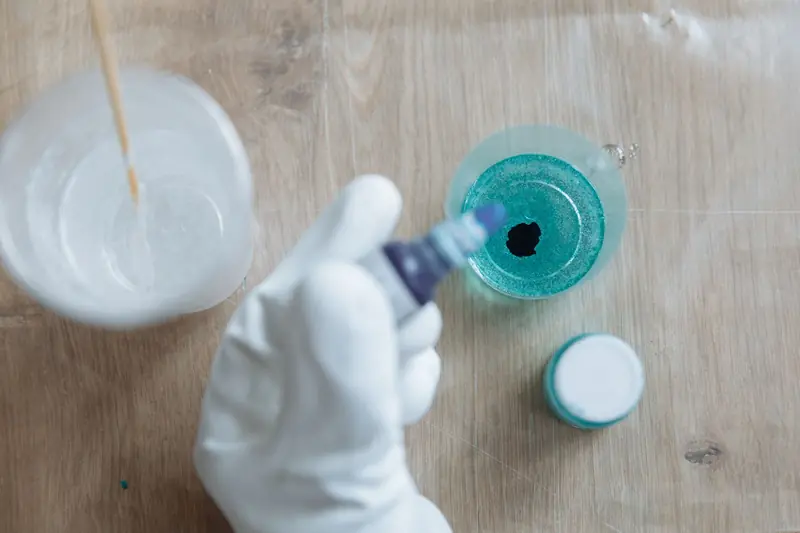
First decide when the cloudiness appeared. Resin that looks milky while it is still liquid has a temperature or mixing problem, and it can often be rescued before it sets. Resin that was clear in the cup and came out dull, hazy or frosted has a surface problem from the mold, from water or from the air in the room. This page covers two-part epoxy (coating, art and casting resin) and UV resin. Haze on the surface can be fixed. Haze locked deep inside a cured casting cannot be reached, so prevention matters most for thick pieces.
What kind of cloudy is it? Match what you see
Read down the left column until a row matches your piece. The most common causes come first. The first two rows describe liquid resin in the cup, the rest describe a cured piece. More than one cause can apply at once, for example a room that is both cold and damp.
| What you see | Likely cause | What to do |
|---|---|---|
| Milky, thick liquid with thousands of tiny bubbles | Cold resin: bottles or room below about 72 F | Warm the closed bottles in warm water 10 to 15 minutes. Work at 70 to 80 F. |
| Frothy, foamy mix right after stirring | Air whipped in by fast stirring | Stir slowly 3 to 5 minutes, rest the cup, pass a heat gun over the pour. |
| Evenly frosted face where the resin touched the mold | Matte mold surface copied onto the resin | Add a thin gloss top coat, or wet sand and polish. Use a shiny mold next time. |
| Hazy patch or white cloud around a flower, paper or water drop | Moisture from inclusions, tools, colorant or the mold | Sand the area and pour a fresh coat. Dry everything fully next time. |
| Oily film and a hazy top surface after a humid cure | Amine blush: humid air reacting with the hardener | Wash with warm soapy water and dry. Sand and recoat if it is still dull. |
| Streaks in the cup, then cloudy soft spots after cure | Under-mixed resin and hardener | Scrape off soft resin, sand with 80 grit, recoat. Mix 3 to 5 minutes next time. |
| Dull haze of fine scratches after sanding | Sanding stopped at a coarse grit | Keep wet sanding up to 3000 grit and polish, or cover with a top coat. |
Why is my resin cloudy in the cup? Cold resin
Cold epoxy is thick. ArtResin describes it as milky from thousands of micro bubbles, hard to pour and slow to level. Makers ask for a steady room of about 70 to 80 F. ArtResin asks for 75 to 85 F and reports trouble below 72 F. A bottle stored in a garage or delivered in winter is often far colder than the room.
Stand the closed bottles in warm, not hot, water for 10 to 15 minutes, then dry them before opening so no water gets into the resin. Warm resin cures faster: expect about 10 minutes less working time. Keep the room warm until the piece has set, because a cold cure can also leave the surface tacky. The epoxy resin cure time chart shows how room temperature changes the wait.
Note.Micro bubbles that cure inside a thick casting stay there. Sanding and top coats only reach the surface, so warm the resin before the pour, not after.
Whipped air and under-mixing
Fast stirring folds air into the mix and turns it frothy. Stir slowly for 3 to 5 minutes, scraping the sides and bottom of the cup. Let the cup rest for a few minutes so bubbles rise, pour, then give epoxy a quick pass with a heat gun or torch. More methods are in how to get bubbles out of resin.
Stirring too little causes a different cloud. Streaks in the liquid are resin and hardener that have not blended. They cure as hazy, soft or sticky patches. Keep stirring until the streaks are gone, and measure the two parts the way the label says. The mixing ratio calculator converts a ratio into amounts for your batch.
Why is my resin mold cloudy? Matte molds
Resin copies the mold surface exactly. A glossy cavity gives a glossy piece and a matte cavity gives a frosted one. This is not a curing fault: the resin under the frosted skin is clear. It is the likely cause when every face that touched the mold is evenly dull and the open face, which touched only air, is shiny.
Look into the cavity before you pour. If it is matte, plan on a top coat or on polishing. Residue left in a mold is copied too, so wipe uncured resin out with isopropyl alcohol and follow how to clean silicone resin molds between pours.
Moisture and humidity: cloudy patches and amine blush
Water inside the resin shows as hazy patches or a white cloud around an inclusion. Sources are flowers or paper that were not fully dry, water in a colorant, wet tools, or a mold that was washed or filled with water to measure it and not dried. If the haze is at the surface, sand the area and pour a fresh coat. A cloud deep in a casting cannot be removed.
Water in the air causes amine blush: an oily film with cloudiness on the open face of epoxy that cured in a humid room. West System calls it a normal byproduct of epoxy cure in certain conditions, and says it is water-soluble. ArtResin asks for humidity below 80 percent, ideally about 50 percent, and suggests a dehumidifier or air conditioning.
Note.Blush washes off with water, so wash first. Wipe with warm soapy water, rinse and dry. Sand and recoat only if the surface is still dull after washing.
Why is my UV resin cloudy?
UV resin is one part with no hardener, so ratio and under-mixing do not apply. The usual causes are air stirred in with a colorant, moisture in a colorant or inclusion, a matte mold, or a thin under-cured film on the surface. Too much pigment blocks the light: Let's Resin says to keep add-ins under 5 percent of the resin volume.
To fix cloudy cured UV resin, cure it again for 3 to 5 minutes per side under the lamp. Wipe any tacky film off with isopropyl alcohol, then brush on a thin clear layer of UV resin and cure it. Make the wipe quick: Let's Resin warns that rough scrubbing, high-strength alcohol or acetone can cloud a finished piece. A surface that stays sticky is covered in why UV resin stays sticky.
How to fix cloudy epoxy resin that has already cured
Work from the gentlest fix to the strongest, and stop as soon as the piece is clear. All of these treat the surface only, so they cannot clear haze inside the resin.
- 1
Wait for the full cure. Most coating and casting epoxies are dry to the touch in about 24 hours and fully cured in 72 hours. Deep pour epoxy takes 5 to 7 days or more.
- 2
Wash the piece with warm soapy water, rinse and dry it. If the haze was amine blush, the surface may already be clear.
- 3
For a matte or scratched surface, wet sand through 400 or 600, 800, 1000, 1500, 2000 and 3000 grit, then buff with polishing compound.
- 4
Or skip the fine grits: scuff the surface, wipe off the dust and pour a thin coat of coating epoxy, about 1/8 in (3 mm). ArtResin notes that the cloudy look left by sanding disappears under the next layer.
How to keep resin from turning cloudy
Most cloudy resin comes from temperature, water or stirring. Each of these is set before the pour, so a short check of the room and the materials prevents nearly every case in the table.
- Keep resin, room and mold at about 70 to 80 F from mixing until the piece has set. Check your label for its own range.
- Warm cold bottles in warm water for 10 to 15 minutes and dry them before opening.
- Keep humidity below 80 percent, ideally about 50 percent, while epoxy cures.
- Stir slowly for 3 to 5 minutes, scraping sides and bottom. Use a second cup if your label asks for it.
- Dry flowers, paper and other inclusions fully. Dry molds and tools after washing.
- Limit colorant: up to about 6 percent of the mixed volume for epoxy, under 5 percent for UV resin.
- Choose a shiny mold when you want a glossy piece straight out of the mold.
Quick answers
Short answers to the most searched questions about cloudy resin. The table at the top of the page matches each look to its cause.
- Why is my art resin cloudy? Coating and art epoxy most often turns milky because it is cold. Warm the closed bottles in warm water for 10 to 15 minutes and work in a room of 70 to 80 F.
- How to fix cloudy epoxy resin? Wash it with warm soapy water first. If it is still dull, wet sand up to 3000 grit and polish, or pour a thin gloss top coat.
- Why is my UV resin cloudy? Usually air or moisture from a colorant, a matte mold, or an under-cured surface film. Keep add-ins under 5 percent and cure both sides.
- How to fix cloudy cured UV resin? Cure again for 3 to 5 minutes per side, wipe off any tacky film, then add a thin clear layer of UV resin and cure it.
- Why is my resin mold cloudy? A matte mold gives a matte piece. The resin is clear underneath, and a top coat or polishing brings the gloss back.
What you need for this
- See price on AmazonAmazon
Let's Resin Resin Polishing Kit, 33 Pieces
From Best epoxy resin polishing kit: compounds, pads and sandpaper
- See price on AmazonAmazon
LET'S RESIN 350W dual temp heat gun for resin
From Best heat gun for resin art: popping bubbles without damage
- See price on AmazonAmazon
LET'S RESIN casting resin kit, 34 oz
From Best epoxy resin for silicone molds: clear casting picks