Step 1 of the process
Measure and mix
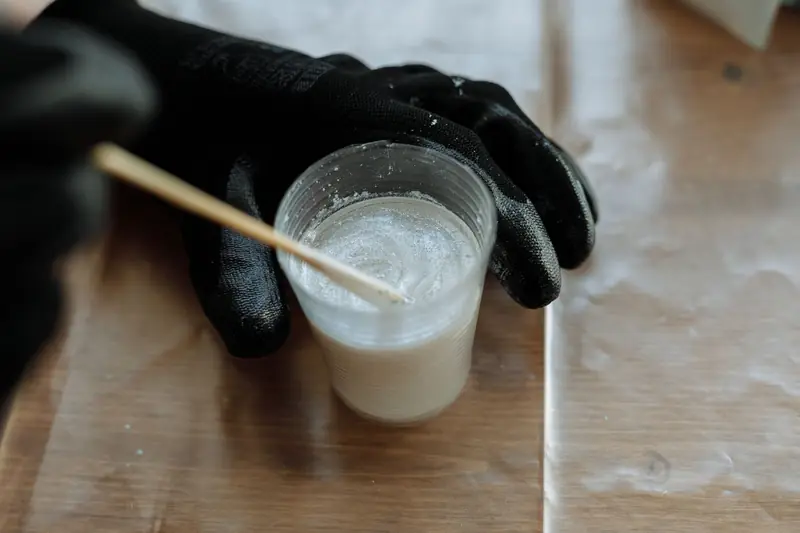
Find the volume of the mold, add a small margin, split it into Part A and Part B by the ratio on the label, then stir slowly for 3 to 5 minutes, scraping the sides and bottom of the cup.
- Amount
- mold volume plus a small margin
- Ratio
- as printed: by volume or by weight
Start with the amount. A rectangular mold holds length times width times depth, and one cubic inch is 16.4 ml. The resin calculator does this for round, square and odd shapes and adds a margin for what stays in the cup. For a mold with no simple shape, fill it with water, pour the water into a measuring cup and read the volume. Dry the mold completely afterward.
Then the ratio. Labels give it by volume or by weight, and the two are not the same number, because Part A is denser than Part B. One popular art resin is 1:1 by volume but 100:84 by weight. Measure the way your label says. The mixing ratio calculator splits any total into Part A and Part B. A wrong ratio is the usual reason epoxy stays sticky.
Stir slowly for 3 to 5 minutes, scraping the sides and the bottom of the cup, until no streaks are left. Several makers ask you to pour the mix into a second clean cup and stir again. Fast stirring whips in air. At the end, do not scrape the walls of the cup into the mold: that film is the least mixed resin in the cup and it leaves soft spots.
Ready to move on when: The mix is clear with no streaks or swirls, and it was measured exactly the way the label says.
Common mistakes at this stage
- Weighing a resin whose ratio is given by volume, or the reverse.
- Changing the ratio to make the resin cure faster or harder.
- Stirring for one minute and pouring.
Notes for this stage
- How to use resin casting powder: water ratio, mixing and cure timeHow to use resin casting powder: 3:1 powder to water by weight, a 2 minute stir, demold in 25 to 30 minutes, full cure in about 2 hours, then seal.How-to
- Why epoxy resin stays sticky and how to fix a bad cureEpoxy still sticky after 24 to 72 hours? Tell wet, tacky and soft-spot cures apart, find the cause, and see what warmth or a fresh coat can save.Fix
Gear for this stage
Useful at every step
- Epoxy resin calculator by mold shape and sizeHow much resin a mold needs, in ml, fl oz and grams, split into Part A and Part B.Tool
- How to get bubbles out of epoxy and UV resinGet bubbles out of epoxy and UV resin: a where-are-the-bubbles table, heat gun and toothpick fixes, and prevention up to a 40 to 60 psi pressure pot.Fix
- Is epoxy resin toxic? A safe setup for resin art at homeWhat maker safety data sheets say about liquid epoxy: skin and eye irritant, skin allergy with repeated contact. Plus a 7-point home setup checklist.Explainer
- Is UV resin safe to use at home? Skin contact, fumes and curingWhat a UV resin safety data sheet says about skin contact, fumes and cured pieces: H315, H317, H319, gloves, ventilation and how to read the 16 sections.Explainer