Explainer
Is epoxy resin toxic? A safe setup for resin art at home
Published
As an Amazon Associate we earn from qualifying purchases. This does not change our picks. Affiliate disclosure
New to Prime? Try Prime free for fast, free shipping on eligible items.
Short answer
Maker safety data sheets class liquid epoxy resin and hardener as skin and eye irritants and warn that repeated skin contact can cause a skin allergy (sensitization). Makers ask for nitrile gloves, eye protection and a ventilated room, plus a respirator with organic vapor cartridges where ventilation is poor. Read the safety data sheet for your own product first.
Gear for this job
All 7 picks compared3M 7513 OV/P95 Advanced Comfort respirator, Large
See price on AmazonSee it on Amazon3M Quick Latch Multi-Purpose Respirator 65023 w/ 1-Pair Cartidg...
See price on AmazonSee it on Amazon3M 60921 OV/P100 cartridge/filter, 1 pair
See price on AmazonSee it on Amazon
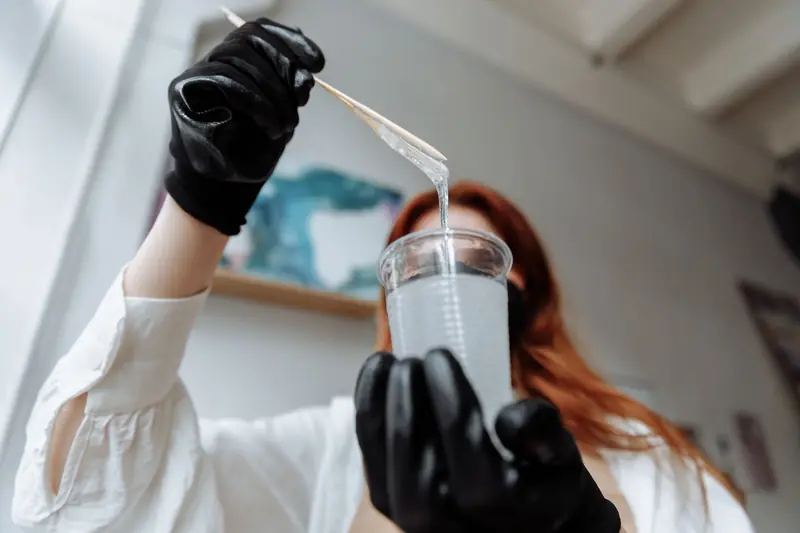
This page is for anyone deciding whether resin art can be done at home or in an apartment. The answer changes with the state of the resin: liquid Part A and Part B, resin that is curing, sanding dust, and the cured piece are four different things. Products differ too. Everything below reports what maker safety data sheets (SDS), maker safety pages and NIOSH state, with the source named. It is a practical checklist, not medical advice and not a guarantee. If you react to resin, follow the first aid section of your product's SDS.
Is epoxy resin dangerous? What the documents state
Each row is a statement from a named document about that maker's own product. Your resin may be classed differently, so find its SDS on the maker's site and read sections 2, 4 and 8: hazards, first aid and protective equipment.
| Exposure | What the document states | Source |
|---|---|---|
| Liquid resin on skin | Skin irritant. Repeated and prolonged exposure may cause skin sensitization | ArtResin SDS, 11/2018 |
| Hardener (Part B) on skin or in eyes | Corrosive, can cause severe skin and eye burns | Smooth-On EpoxAcast 690 bulletin |
| Liquid resin in eyes | Eye irritant | ArtResin SDS, 11/2018 |
| Resin and hardener in general | May cause skin and respiratory allergic reactions | TotalBoat ThickSet data sheet |
| Sanding dust | Breathing dust of partially cured epoxy raises the risk of sensitization | West System safety guidelines |
| A large batch in the cup | Mixed epoxy generates heat and may fume and smoke | MAS Deep Pour product page |
Epoxy resin allergy: why skin contact matters most
The hazard that maker documents repeat most is sensitization: a skin allergy that develops with contact. NIOSH lists epoxy resins among the common causes of allergic contact dermatitis. The ArtResin SDS carries the hazard statement that repeated and prolonged exposure may cause skin sensitization, and lists allergy and skin conditions including eczema as conditions that exposure can aggravate.
West System, an epoxy maker, says a person may become sensitized after many exposures or after just one. ArtResin says that anyone who has an allergic reaction should stop using all epoxy resins. The SDS wording for a reaction is plain: if skin irritation or a rash occurs, get medical attention. The maker documents read for this page all ask for gloves, for small pours as much as large ones.
Note.Uncured resin on a tool, a bottle or a tabletop stays liquid and still counts as skin contact. Wipe drips while they are wet and keep gloves on until cleanup is done.
Resin casting ventilation and respirators
Makers ask for a well-ventilated area as the minimum. The ArtResin SDS lists good general ventilation, and adds an organic chemical cartridge respirator, if needed, for a non-vented area. Smooth-On says to avoid breathing fumes and recommends a NIOSH approved respirator for EpoxAcast. West System says vapor levels rise in warm and unventilated spaces.
Makers do not put a number on well ventilated. In hobby practice it means outside air moving through the room, such as an open window with a fan, not a closed room. A respirator has to match the hazard. West System names an air-purifying respirator with an organic vapor cartridge for vapors, and a dust mask or respirator rated N95 or better for sanding dust. A dust mask does not stop vapors. Options are compared in respirators for resin work.
A setup for resin art at home: checklist
This list puts the maker instructions above into the order of a session. It applies to two-part epoxy. UV resin has its own notes in is UV resin safe. Where your SDS asks for more, the SDS wins.
- Read the SDS and label of your product before the first pour, and keep them where you can find them.
- Wear nitrile gloves and eye protection from opening the bottles to the end of cleanup. Smooth-On adds long sleeves.
- Work in a room with outside air moving through it. Where that is not possible, makers call for a respirator with organic vapor cartridges.
- Keep food, drinks and dishes out of the work area. West System says to wash before eating. Use cups and tools kept for resin only.
- Keep children and pets out of the room while resin is liquid or curing. Maker labels say to keep the product out of reach of children.
- Mix only what one pour needs. A large mass of mixed epoxy heats up in the cup. Size the batch with the resin calculator.
- Cover the table, wipe spills while wet, and leave the piece to cure in a ventilated room, away from where people sleep and eat.
Why sanding dust matters
Epoxy that feels hard is not always fully cured. West System says epoxy may take over two weeks at room temperature to cure completely, and that breathing the dust of partially cured epoxy increases the risk of sensitization. Smooth-On says to wear a NIOSH approved mask when sanding or machining cured EpoxAcast, to prevent inhalation of particles.
Wait for the full cure on your label before sanding: about 72 hours for most coating and casting epoxies and 5 to 7 days or more for deep pour. Sand wet, which keeps dust out of the air, wear a particulate filter and wipe up the slurry before it dries. Grits and steps are in how to sand and polish resin.
Resin on skin or in eyes: what the documents say
Follow the first aid section of your own SDS. The wording differs by maker. For skin, the ArtResin SDS says to rinse well with water, and ArtResin's safety page says to wash promptly with soap. For eyes, ArtResin says to flush with water for 15 minutes without rubbing, and Smooth-On says to flush for 15 minutes and get immediate medical attention. If resin is swallowed, the ArtResin SDS says to call a Poison Control Centre or a doctor immediately.
Makers disagree on cleaners for skin. ArtResin says not to use vinegar, alcohol or acetone on skin. West System says never to use solvents on skin. Smooth-On's bulletin names white vinegar followed by soap and water for its resin, and a waterless hand cleaner for its hardener. Use what the SDS of your product says, and soap and water where it gives no other instruction.
Is cured epoxy resin toxic?
Maker statements about cured resin are narrower than the labels suggest. ArtResin says its product conforms to ASTM D4236 and is non-toxic when used as directed, and its SDS still lists the liquid as a skin and eye irritant and a possible sensitizer. The claim describes use as directed: correct ratio, full cure, gloves and ventilation. The ArtResin SDS also says the cured product may be disposed of with household garbage.
This site does not call a finished piece non-toxic. For a piece that will touch food or drink, the question is a separate one with its own conditions, covered in is epoxy resin food safe.
Quick answers
Short answers to the searches behind this page. Each one reports maker documents. Your product's SDS has the final word.
- Is resin art dangerous? Liquid resin and hardener are skin and eye irritants and can cause skin allergy with repeated contact, by maker safety data sheets. Gloves, eye protection and ventilation are the standard precautions.
- Is it safe to work with epoxy resin at home? Makers such as Smooth-On and ArtResin describe their products as safe to use when the directions are followed. The directions include gloves, eye protection and a ventilated room.
- What is an epoxy resin allergy? Sensitization: a skin allergy that can develop after repeated contact with liquid resin or hardener. If a rash occurs, the SDS says to get medical attention.
- What ventilation does resin casting need? A well-ventilated area at minimum. In a non-vented area, maker documents call for a respirator with organic vapor cartridges.
- Is resin art toxic once cured? This site does not call a cured piece non-toxic. Maker claims apply to a product used as directed and fully cured.
What you need for this
- See price on AmazonAmazon
3M 7513 OV/P95 Advanced Comfort respirator, Large
From Best respirator for resin work: cartridges, fit and gloves
- See price on AmazonAmazon
LET'S RESIN casting resin kit, 34 oz
From Best epoxy resin for silicone molds: clear casting picks
- See price on AmazonAmazon
Let's Resin Resin Polishing Kit, 33 Pieces
From Best epoxy resin polishing kit: compounds, pads and sandpaper