Explainer
Is epoxy resin food safe once cured? What the labels mean
Published
As an Amazon Associate we earn from qualifying purchases. This does not change our picks. Affiliate disclosure
New to Prime? Try Prime free for fast, free shipping on eligible items.
Short answer
There is no general yes. Some makers state that their epoxy complies with FDA 21 CFR 175.300 when it is measured, mixed and fully cured as directed. ArtResin and Alumilite Amazing Clear Cast are two examples. The statement covers that product only. Added colorants, an off ratio, an incomplete cure and heat above the resin's limit all fall outside it.
Gear for this job
All 6 picks comparedBond Craftor tumbler epoxy resin, 32 oz
See price on AmazonSee it on AmazonLET'S RESIN high viscosity epoxy, 1 gallon
See price on AmazonSee it on AmazonHogg fast set epoxy resin for tumblers, 16 oz
See price on AmazonSee it on Amazon
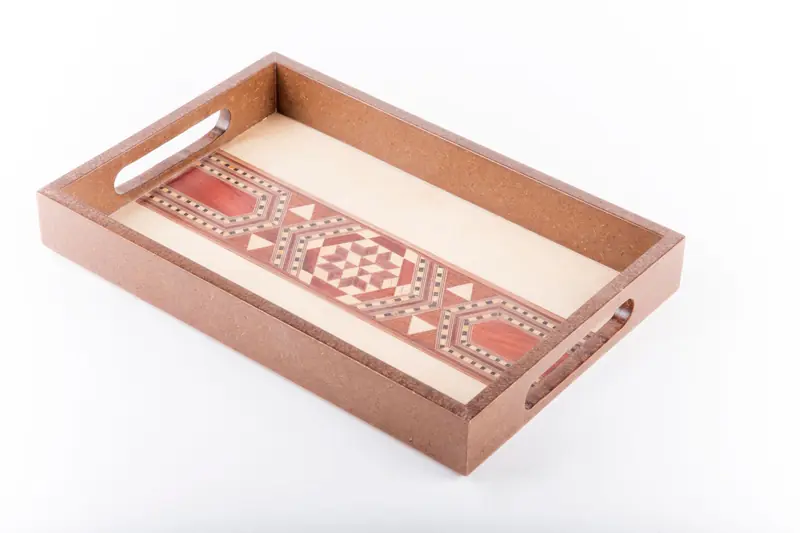
This page is for makers of coasters, serving trays, boards and tumblers who want to know whether food or drink can touch the resin. It reports what makers and the regulation say and does not call any finished piece food safe. Whether a piece qualifies depends on three things: the specific product, a full cure, and the maker's own written statement. If the label, the technical data sheet and the safety data sheet of your resin say nothing about food contact, there is no statement to rely on, and the piece is decorative.
What food safe on an epoxy label refers to
In the United States the reference is FDA 21 CFR 175.300, a regulation titled Resinous and polymeric coatings. It says such coatings may be used as the food-contact surface of articles that hold or handle food when they are made from the substances it lists and stay within its extraction limits. Epoxy resins are among the listed substances. The regulation names ingredients and limits. It does not name brands.
The FDA does not approve epoxy brands. A line such as complies with FDA 21 CFR 175.300 is the maker's own statement about its formula. Two examples from maker documents: the ArtResin safety data sheet says the product is considered food safe under that regulation, and the Alumilite technical data sheet for Amazing Clear Cast says it complies with it. ArtResin also says its resin passed leaching tests when used as directed.
Is epoxy resin food safe once cured? The conditions
Cured is the key word in every maker statement, and it means fully cured, not hard to the touch. ArtResin says its resin is considered safe for food contact only once it has fully cured, and gives 72 hours. The statement also depends on how the resin was made up. These are the conditions ArtResin attaches, and they show what any such statement assumes.
- Measured as directed: ArtResin asks for the exact 1:1 ratio by volume. An off ratio leaves the resin tacky or uncured. The mixing ratio calculator splits a batch.
- Mixed thoroughly: under-mixed resin cures with soft or sticky spots. A piece with a bad cure is outside the statement. See why epoxy resin stays sticky.
- Fully cured: 72 hours for most coating and casting epoxies, 5 to 7 days or more for deep pour. Times are in the epoxy cure time chart.
- Nothing added: colorants, glitter, mica and inks are not part of the maker's statement. ArtResin says alcohol ink makes its resin no longer non-toxic.
- Liquid resin kept away from food: ArtResin says to keep food and drinks well away from resin and hardener before they cure.
Note.For a colorant you are not sure about, ArtResin suggests a final layer of clear, untinted resin over the piece. That is the maker's advice for its own product, not a rule for every brand.
Coasters, trays, tumblers and boards: what to check
How much the statement matters depends on what touches the resin. A coaster meets a cup, not food. A serving board meets food directly. Use the table to see what to check for each item. It does not rate any item as safe.
| Item | What touches the resin | What to check |
|---|---|---|
| Coaster | The base of a cup or glass, not food | The resin's heat limit against hot mugs |
| Serving tray or charcuterie board | Food, directly | A food contact statement, full cure, ratio, no uncoated colorant |
| Tumbler, resin on the outside | Hands, and lips near the rim. The drink stays inside the cup | A food contact statement, and the heat limit for hot drinks |
| Cutting board | Food and knife cuts | No maker statement read for this page covers a resin surface cut by knives |
| Silicone resin mold used for chocolate | Food, after liquid resin | Whether the mold maker labels it food grade. Keep food molds apart from resin molds |
| UV resin piece | Depends on the item | No food contact statement found in the UV resin documents read |
Which epoxy resin is food safe? How to check a product
No list of food safe resins exists, because the statement belongs to each maker and each formula. Check your own product in its documents. Look for the regulation number in the technical data sheet and in the safety data sheet (ArtResin prints it in section 16), then read the conditions next to it. ArtResin itself says not all epoxy resins are food safe and points to the maker's safety data sheet.
The same goes for the question is casting resin food safe. It depends on the product, not on the type. Amazing Clear Cast is sold for casting and coating and its data sheet carries the statement. The data sheets read for this page for TotalBoat ThickSet and Smooth-On EpoxAcast 690, and the MAS Deep Pour product page, make no food contact statement. Without one, treat the piece as decorative.
Is UV resin food safe?
No maker statement was found. The Let's Resin safety data sheet for UV resin and the Resin Rockers UV resin instructions say nothing about food contact, and the Let's Resin sheet classifies the liquid as a skin sensitizer. UV resin also cures only where light reaches, so a thick or heavily colored piece can be under-cured inside. With no statement to report, UV resin pieces belong on the decorative side. Handling is covered in is UV resin safe.
Hot drinks, hot plates and the dishwasher
Heat is a separate limit from food contact. Data-sheet heat limits for clear epoxy run from about 108 to 130 F. ArtResin gives 120 F (50 C) and says the resin may soften above that. Smooth-On says not to rest hot beverage cups or containers above 120 F on cured EpoxAcast 690. TotalBoat says not to place items hotter than 125 F on cured ThickSet. The resin heat resistance chart lists the figures by product.
None of the maker documents read for this page gives a dishwasher rating for resin art. A dishwasher uses hot water and heat to dry, so compare your resin's heat limit with it before a piece goes in, and ask the maker if the label is silent.
Can you use resin molds for chocolate?
Only a mold that its maker labels food grade is meant for food, so check the listing of a silicone mold sold for resin crafts before assuming it is. A mold that has already held resin is a second problem. It has been in contact with liquid resin and hardener, which safety data sheets say not to ingest and which ArtResin says to keep well away from food. Keep one set of molds for food and another for resin, and do not move a mold from resin to food.
Quick answers
Short answers to the searches behind this page. Each one reports a maker's statement or the lack of one. None certifies a finished piece.
- Is epoxy resin food safe once cured? Only where the maker states it for that product, mixed and fully cured as directed. ArtResin gives 72 hours. Colorants and a bad cure fall outside the statement.
- Which epoxy resin is food safe? One whose data sheet states compliance with FDA 21 CFR 175.300, such as ArtResin or Alumilite Amazing Clear Cast. Read the conditions attached.
- Is UV resin food safe? No food contact statement was found in the UV resin maker documents read for this page, so treat UV resin pieces as decorative.
- Can you use resin molds for chocolate? Not a mold that has held resin. Use a mold labeled food grade and keep it for food only.
- Can I put resin art in the dishwasher? No maker document read gives a dishwasher rating. Clear epoxy heat limits are about 108 to 130 F, so check your resin's limit first.
What you need for this
- See price on AmazonAmazon
Bond Craftor tumbler epoxy resin, 32 oz
From Best epoxy resin for tumblers: fast cure, clear and heat tolerant
- See price on AmazonAmazon
LET'S RESIN casting resin kit, 34 oz
From Best epoxy resin for silicone molds: clear casting picks
- See price on AmazonAmazon
LET'S RESIN mica powder set, 60 colors x 5 g
From Best mica powder and pigment powder sets for epoxy and UV resin