Step 2 of the process
Color and add-ins
Colorants go into the mixed resin and stay small: about 6 percent of the volume at most for epoxy and under 5 percent for UV resin. Too much color, or anything damp, spoils the cure.
- Epoxy colorant limit
- about 6 percent of the mixed volume
- UV resin colorant limit
- under 5 percent
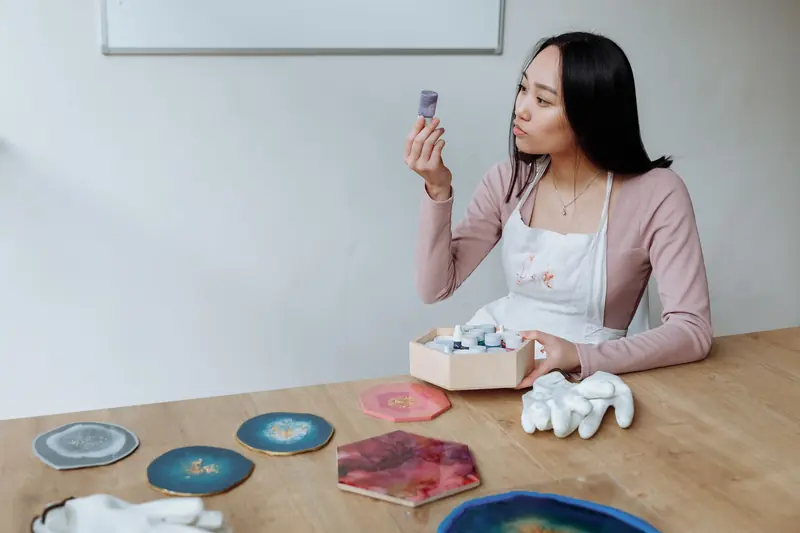
Color goes into the mixed resin, a little at a time. Makers put the ceiling at about 6 percent of the mixed volume for epoxy and under 5 percent for UV resin. Past that the resin may stay soft or sticky. Mica powder gives shimmer and can turn the piece opaque; resin dyes keep it transparent. The mica powder guide compares pigment sets.
UV resin is the sensitive one. It cures only where light reaches, and pigment blocks light: the darker the color, the longer the cure, and dense opaque color may never cure at depth. Keep colored UV layers thin and cure them from both sides. How to color UV resin goes through each kind of colorant.
Add-ins follow one rule: nothing wet. Moisture in a colorant, a damp flower or a fresh leaf turns the resin cloudy around it. Dry flowers and paper completely before embedding them and use colorants made for resin. Stir color in slowly so you do not add the bubbles you just avoided.
Ready to move on when: The color is even with no clumps of powder, and the amount of colorant stayed under the maker's limit.
Common mistakes at this stage
- Pouring in colorant by eye instead of a little at a time.
- Embedding a flower or paper that is not fully dry.
- Loading UV resin with opaque pigment and curing it in one thick layer.
Notes for this stage
Gear for this stage
- Best epoxy resin dye: liquid pigments, alcohol inks and black pasteSeven epoxy resin dyes compared: translucent liquid pigment sets, alcohol inks and an opaque black paste, by color count, bottle size and stated use.Gear guide
- Best mica powder and pigment powder sets for epoxy and UV resinSeven mica powder and pigment powder sets for epoxy and UV resin compared by number of colors, grams per color, stated finish and cosmetic grade claims.Gear guide
Useful at every step
- Epoxy resin calculator by mold shape and sizeHow much resin a mold needs, in ml, fl oz and grams, split into Part A and Part B.Tool
- How to get bubbles out of epoxy and UV resinGet bubbles out of epoxy and UV resin: a where-are-the-bubbles table, heat gun and toothpick fixes, and prevention up to a 40 to 60 psi pressure pot.Fix
- Is epoxy resin toxic? A safe setup for resin art at homeWhat maker safety data sheets say about liquid epoxy: skin and eye irritant, skin allergy with repeated contact. Plus a 7-point home setup checklist.Explainer
- Is UV resin safe to use at home? Skin contact, fumes and curingWhat a UV resin safety data sheet says about skin contact, fumes and cured pieces: H315, H317, H319, gloves, ventilation and how to read the 16 sections.Explainer