Fix
Why cured resin is bendy or rubbery and how to harden it
Published
As an Amazon Associate we earn from qualifying purchases. This does not change our picks. Affiliate disclosure
New to Prime? Try Prime free for fast, free shipping on eligible items.
Short answer
Resin is bendy when it has not finished curing. Coating and casting epoxy is hard to the touch in about 24 hours but needs 72 hours for a full cure, and deep pour epoxy needs 5 to 7 days or more. The standard fix is 2 to 7 more days lying flat in a warm room. If the piece is still soft after that, the ratio, the mixing or too much colorant is the cause, and it may not harden further.
Gear for this job
All 7 picks comparedLET'S RESIN casting resin kit, 34 oz
See price on AmazonSee it on AmazonLET'S RESIN deep pour epoxy resin, 51 oz
See price on AmazonSee it on AmazonTeexpert clear epoxy resin kit, 64 oz
See price on AmazonSee it on Amazon
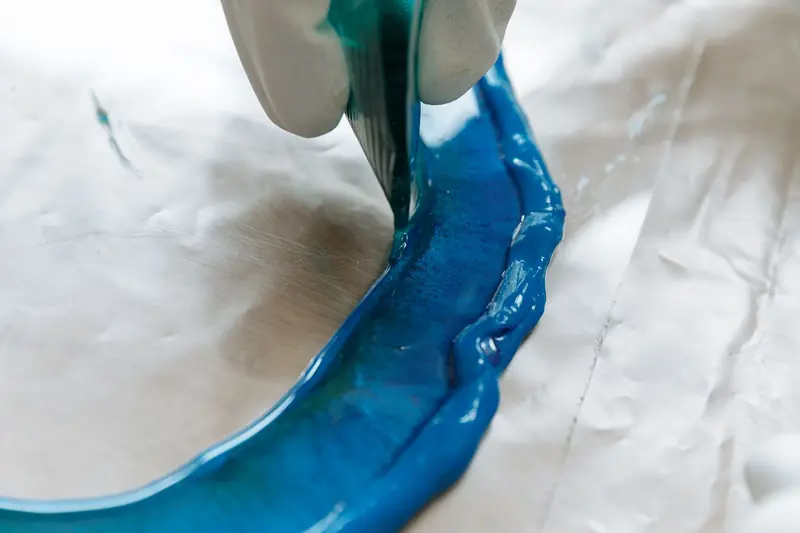
Bendy is not the same as sticky. A bendy piece is dry on the surface and keeps its shape on the table, but flexes in the hand. That usually means the cure is not finished, the piece is thin, or both. This page is for two-part epoxy that came out of a mold flexible: coasters, trays, bookmarks, keychains. The first job is to find out whether the piece only needs more time or was measured or mixed wrong.
Why is my resin bendy? Match what you see
Find the row that matches your piece, most likely first. The first four are slow or unfinished cures that time and warmth fix. The last two are measuring or mixing faults that time alone may not fix.
| What you see | Likely cause | What to do |
|---|---|---|
| Dry surface, flexes, demolded at about 24 hours | Cure not finished: hard to the touch is not fully cured | Lay it flat in a warm room for 2 to 7 more days |
| Thin piece bends, thicker pieces from the same batch are hard | Thin resin flexes more and cures slower | Full cure time, flat. Add a layer or a backing if it still flexes |
| Deep pour resin still flexible after 2 to 3 days | Normal: full cure takes 5 to 7 days, some 7 to 14 | Keep it flat and supported, and wait |
| Bendy after curing in a cold room or garage | Cold slows the cure | Move it to 70 to 80 F, or your label's range |
| Still dents with a fingernail after a week in warmth | Ratio off, short mixing, or colorant over the limit | Pour a correctly measured coat over it, or remake |
| Rubbery and also tacky or wet in places | Wrong ratio or unmixed resin | Scrape off wet resin, then recoat |
Quick test: needs more time, or mixed wrong?
Press a fingernail into the back or an edge, and feel the surface. Fully cured epoxy is hard: Smooth-On describes cured EpoxAcast as unable to be penetrated with a fingernail, and TotalBoat uses a fingernail dent as the sign that a layer has not cured yet. Then count the days since the pour against the full cure time on the label.
| What you find | Likely meaning | Next step |
|---|---|---|
| Dry, no nail mark, the piece only flexes | Thin piece, or the last part of the cure | Wait out the full cure time, laid flat |
| Dry, nail leaves a dent, pour is younger than its full cure time | Cure not finished | Warm room, 2 to 7 more days |
| Dry, still dents after 7 extra days in a warm room | Ratio, mixing or too much colorant | Pour a correctly mixed coat over it, or remake |
| Tacky or wet anywhere | Wrong ratio or unmixed resin | Scrape off what is wet and recoat |
How long until epoxy resin is fully hard?
Hard to the touch and fully cured are different points. ArtResin reaches about 95 percent of its hardness after 24 hours and is fully cured at around 72 hours, and flexing it earlier will bend it. EcoPoxy's FlowCast data sheet says a demolded casting is solid but not fully cured, may sag under its own weight and should be supported until full cure.
Cold stretches these times. As a rule of thumb only, each 18 F (10 C) cooler roughly doubles the cure time, and ArtResin lists a cold room among the causes of flexible resin. A coaster demolded on schedule in a cold garage can be days short of its full cure. The epoxy resin cure time chart has times by product.
| Resin type | Demold | Full cure |
|---|---|---|
| Coating or art epoxy | about 24 hours | 72 hours |
| Casting epoxy | 18 to 24 hours | 72 hours |
| Deep pour epoxy | 24 to 72 hours | 5 to 7 days, some 7 to 14 |
| UV resin | minutes | minutes under the lamp |
Why is my thin resin piece bending?
Thin resin flexes more than thick resin of the same hardness, and it also cures more slowly. Smooth-On notes that castings of 1/4 inch or less cure more slowly. ArtResin says thin layers may stay flexible until fully cured, especially when the piece comes from a mold and has no backing behind it.
So a bookmark or a thin coaster can bend when a thick block from the same batch is rigid. Give thin pieces the full cure time, lying flat so they do not set with a curve. If a fully cured piece still flexes too much, ArtResin's advice is to add another layer or a sturdy backing such as a bezel or a panel. Makers do not agree on a minimum thickness, so none is given here. To size a second layer, use the resin calculator.
Ratio, mixing and colorant: when time will not fix it
A piece that is still soft after a week in a warm room was probably measured or mixed wrong. ArtResin lists three faults. An incorrect ratio: the mixture may harden, but it often bends or does not fully set. Under-mixing: the resin may harden without curing completely. Too much colorant: more than 6 percent of the total volume may soften the final cure.
ArtResin is direct about the outcome: when measuring, mixing or colorant has affected the cure, the resin may not harden further. Measure the way the label says, by volume or by weight, and let the mixing ratio calculator split the batch into Part A and Part B. If the piece is tacky or wet as well as soft, follow why epoxy resin stays sticky.
How to fix flexible resin art
Start with time and warmth, which fix most bendy pieces. Move on to a new coat only if the piece is still soft after the wait.
- 1
Lay the piece flat on a level surface, on wax paper or back in its mold, so it cannot cure with a bend in it.
- 2
Move it to a warm room: about 70 to 80 F, or the range on your label, and keep it steady.
- 3
Leave it for 2 to 7 more days, the extra time ArtResin gives. Deep pour resin may need its full 5 to 7 days or more.
- 4
Test with a fingernail on the back. No dent and a dry surface mean the cure is done.
- 5
If it still dents after the extra week, pour a carefully measured coat over it, stirred for 3 to 5 minutes, to add strength. ArtResin calls this a possible fix.
Why is my UV resin bendy?
UV resin has no hardener, so ratio and mixing do not apply. A bendy UV piece is either thin or under-cured. Resin Rockers says its resin may feel rubbery right out of the lamp and keeps hardening over the next 6 to 12 hours, so let a fresh piece rest. If it is still soft, cure both sides for 3 to 5 minutes, the time Let's Resin gives for a full cure, and keep layers to about 2 to 3 mm. A piece that is sticky as well is covered in why UV resin stays sticky.
How to keep resin from curing bendy
Bendy resin is nearly always a question of time, temperature or measuring. Your label wins wherever it differs from these general figures.
- Wait for the full cure, not only the demold time: 72 hours for coating and casting epoxy, 5 to 7 days or more for deep pour.
- Cure in a steady room of about 70 to 80 F, or your label's range.
- Measure the way the label says, stir for 3 to 5 minutes and keep colorant under the maker's limit.
- Leave thin pieces flat and supported until fully cured. The resin types are compared in casting resin vs coating resin.
Quick answers
Short answers to the most searched questions about bendy resin. Times are maker figures at 70 to 77 F, and your own label has the final word.
- Why is my resin art bendy? It was moved or demolded before the full cure. Coating epoxy needs about 72 hours. Give it 2 to 7 more days in a warm room.
- Why is my epoxy resin rubbery? Rubbery well past the full cure time points to a wrong ratio, short mixing or colorant over the limit. It may not harden further.
- How to fix flexible resin art? Lay it flat in a room of 70 to 80 F for 2 to 7 more days. If it is still soft, pour a correctly measured coat over it.
- Why is my epoxy resin still soft? Check the label: deep pour resins take 5 to 7 days or more, and a cold room slows every epoxy.
- Why is my resin mold bending? A thin piece fresh from the mold is not fully cured. Keep it flat and supported until the full cure time has passed.
What you need for this
- See price on AmazonAmazon
LET'S RESIN casting resin kit, 34 oz
From Best epoxy resin for silicone molds: clear casting picks
- See price on AmazonAmazon
Bond Craftor tumbler epoxy resin, 32 oz
From Best epoxy resin for tumblers: fast cure, clear and heat tolerant
- See price on AmazonAmazon
Suzzam 36 W double-sided UV resin lamp, 24 LEDs
From Best UV light for curing resin: lamps, flashlights and wattage