Explainer
Does UV resin yellow over time? Why it happens and how to slow it
Published
Short answer
Yes. UV resin can yellow, and every clear epoxy yellows in time. Resin Rockers says its UV resin can yellow if it is cured too long or under too high a wattage, and Let's Resin tells owners to protect finished pieces from light. Alumilite states that all epoxy develops a yellow hue over time. Sunlight, heat above about 100 F (38 C) and age speed it up.
This page is for anyone who wants clear pieces to stay clear: UV resin jewelry and charms, and epoxy castings and coatings. No resin here comes with a promise that it will never yellow. What differs is how fast it happens, and that depends on things you control: how the piece was cured, how much sunlight and heat it gets, and how fresh the resin was. The page reports what makers print on data sheets and instruction pages. It does not rank brands by yellowing, because makers do not publish a shared test for it.
Does UV resin yellow? What the makers say
No maker checked says its resin stays clear forever. The ones that sell a resin as non-yellowing or UV resistant add a limit in the same document. The table puts each claim next to its limit. UV resin makers publish less than epoxy makers, so the page leans on epoxy data sheets for the plainest statements.
| Product | Type | What the maker claims | The limit it adds |
|---|---|---|---|
| Resin Rockers UV resin | UV resin | Contains a UV inhibitor to prevent yellowing | Can yellow if cured too long or under too high a wattage |
| Let's Resin UV resin | UV resin | Pieces can stay beautiful for years with the right care | Protect from light to prevent UV aging. No sunlight or high heat |
| ArtResin | Coating epoxy | UV and hindered amine light stabilizers slow yellowing | Deliberate exposure to UV light is not recommended |
| Alumilite Amazing Clear Cast | Coating and casting epoxy | UV inhibitors help it resist longer | A yellow hue still develops over time. Not advised outdoors |
| TotalBoat ThickSet | Deep pour epoxy | Cured epoxy is non-yellowing | Not designed for continuous UV exposure |
| Smooth-On EpoxAcast 690 and 692 | Casting epoxy | UV resistant | Unpainted epoxy will yellow after UV light or heat above 100 F (38 C) |
Why does UV resin turn yellow over time?
Three things yellow a clear resin: light, heat and age. Sunlight is the main one. ArtResin describes UV yellowing as what happens to cured resin exposed to direct light, and says the stabilizers in its formula slow that down. Let's Resin tells owners of UV resin pieces to protect them from light to prevent UV aging, and to keep them away from sunlight and from high heat such as heaters and stoves.
Heat works on its own too. Smooth-On states that unpainted epoxy will yellow after exposure to UV light or to excessive heat above 100 F (38 C). Age does the rest. Alumilite writes that, as with all epoxy chemistry, a yellow hue develops over time, with or without UV inhibitors. The temperatures makers allow for finished pieces are in the resin heat resistance chart.
Why is my UV resin yellow right after curing?
A yellow tint straight out of the lamp is a curing matter, not aging. Resin Rockers names two causes for its resin: curing too long under the lamp, or a lamp with too high a wattage. It recommends 24 to 36 W for about a minute on each side. Let's Resin advises a lamp above 12 W and not over 54 W, and 3 to 5 minutes per side for a full cure. The two makers give different times, so follow the instructions for your own resin.
The practical rule: cure until the piece is hard, then stop. Under-cured resin is sticky, so do not cut the time below what your maker gives. Leaving a finished piece under the lamp for extra cycles only adds UV and heat. Times by lamp type are in the UV resin curing time chart.
What does non-yellowing UV resin mean on a listing?
It can mean the formula contains UV inhibitors or light stabilizers. These are real additives. ArtResin names UV stabilizers and hindered amine light stabilizers, and Alumilite and Resin Rockers both mention UV inhibitors. In the makers' own wording they slow yellowing or help the resin resist it for longer.
It cannot mean the piece will stay clear for good. The data sheets show the gap between the headline and the small print. TotalBoat calls cured ThickSet non-yellowing and, in the same paragraph, not designed for continuous UV exposure. Smooth-On calls EpoxAcast UV resistant and then says unpainted epoxy will yellow in UV light. No document checked names a standard yellowing test or a number of years. So a UV resin that doesn't yellow is not something a maker's own paperwork supports. Read non-yellowing as slower yellowing.
Note.A listing cannot be checked against a claim it does not define. Look for the maker's data sheet and read what it says about UV exposure and outdoor use.
Epoxy resin yellowing over time: does casting resin yellow?
Yes. Alumilite's data sheet for Amazing Clear Cast says a yellow hue develops over time, as with all epoxy chemistry. It adds where the hue shows most: over bright white surfaces and in thicker layers. Outdoors, it says, UV exposure yellows the resin rather quickly, so it generally does not recommend the product for outdoor use. Dye or metallic powder often hides or reduces the effect, and so does a wood surface with yellow or orange tones.
Deep casting adds a cause of its own: heat from the cure. Pouring deeper than the label allows makes the resin overheat, and yellowing is one of the results, along with bubbles and cracks. TotalBoat tells users not to exceed a pour depth of 1/2 to 1 inch on larger projects, to prevent yellowing or excessive heat. Stay inside the depth per layer on your label. The resin calculator works out how many layers a mold needs, and casting resin vs coating resin explains the depth limits.
Yellow in the bottle: old hardener and storage
Resin can yellow before it is used. ArtResin says its hardener may yellow in the bottle over time through natural oxidation, that this is not the same as UV yellowing, and that yellowed hardener still cures as expected but may not suit white or very light work. Alumilite says the B side of Amazing Clear Cast yellows naturally over time and with exposure to air, which can give cured coatings a yellow hue without affecting the cure.
Shelf life is short enough to matter. ArtResin gives about 1 year unopened and around 6 months once opened. Alumilite gives 1 year. Resin Rockers gives its UV resin roughly 6 to 12 months from opening, stored at room temperature in a dark, dry place. Buy a size you will use within those times, close caps straight after pouring and keep bottles out of sunlight. For UV resin a dark place matters twice, because light also cures it.
How to slow yellowing in UV resin and epoxy
Nothing stops yellowing, but these habits remove the causes named in maker documents. They apply to UV resin and epoxy alike unless a line says otherwise.
- Keep finished pieces out of direct sun: no windowsills, dashboards or outdoor display.
- Keep them away from heat sources such as heaters, stoves and hot cars. Smooth-On puts the yellowing threshold for epoxy at 100 F (38 C).
- Cure UV resin for the time and wattage your maker gives, then stop. Resin Rockers links a yellow tint to over-curing and to lamps above its 24 to 36 W range.
- Pour epoxy within the depth per layer on the label so the cure does not overheat.
- Use fresh resin: within about 6 months of opening for ArtResin, 6 to 12 months for Resin Rockers UV resin. Store bottles closed and in the dark.
- For pieces that will sit in bright rooms, add color. Alumilite notes that dye or metallic powder often hides the yellow hue. See how to color UV resin.
- For epoxy shown outdoors, Smooth-On's route is a clear aliphatic urethane top coat over the cured piece.
Quick answers
Short answers to the most searched questions on resin yellowing. Statements come from maker data sheets and instruction pages, not from tests.
- Does UV resin yellow? Yes, it can. Makers link it to over-curing, strong lamps, sunlight and heat, and none of those checked promises a piece stays clear.
- Is there a UV resin that doesn't yellow? No maker document checked supports that. Non-yellowing means UV inhibitors that slow the change, not a guarantee.
- Why is my UV resin turning yellow? Right after curing: too long under the lamp or too many watts. Months later: sunlight, heat and age.
- Does casting resin yellow? Yes. Alumilite states that all epoxy chemistry develops a yellow hue over time, faster outdoors and more visible in thick layers.
- How do I slow epoxy resin yellowing over time? No direct sun, no heat above 100 F (38 C), pours inside the depth limit and fresh hardener.
What you need for this
 See price on AmazonAmazon
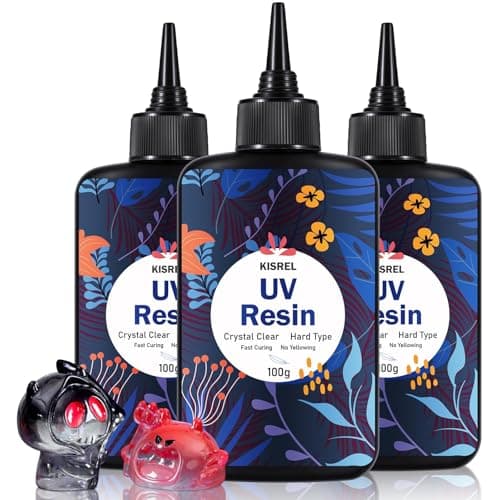
KISREL hard type UV resin, 300 g bottle
From Best UV resin for jewelry making: clear, hard and low odor
 See price on AmazonAmazon
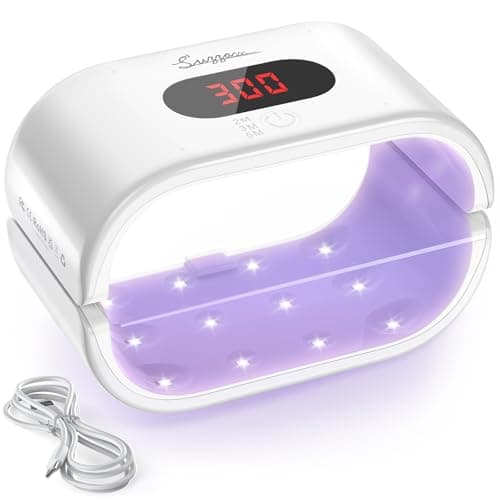
Suzzam 36 W double-sided UV resin lamp, 24 LEDs
From Best UV light for curing resin: lamps, flashlights and wattage
 See price on AmazonAmazon
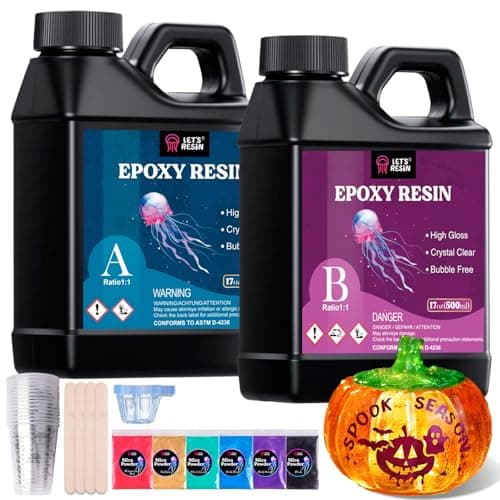
LET'S RESIN casting resin kit, 34 oz
From Best epoxy resin for silicone molds: clear casting picks